
CFI Electric Ltd
Blog
Is Your Home's Wiring a Fire Hazard? Warning Signs to Know
Most house fires don't start in the kitchen or the fireplace — they start inside the walls. Faulty or deteriorating electrical wiring is one of the leading causes of residential fires across Ontario, and the danger is often invisible until it becomes a crisis. In Oshawa, Ontario, where many homes date back to the 1950s, 60s, and 70s, the risk of outdated wiring is particularly real. The good news is that there are warning signs you can watch for — and knowing them could save your home, and your family.
Why Wiring Becomes Dangerous Over Time
Electrical wiring is not designed to last forever. Over decades, insulation cracks and dries out, connections loosen, and materials that were considered acceptable in previous eras — like aluminum wiring or knob-and-tube systems — no longer meet modern safety standards. The problem is that degraded wiring doesn't always trip a breaker or shut off power. It can smolder quietly inside walls for hours before igniting surrounding materials. Understanding the age and condition of your wiring is the first step toward protecting your home in Oshawa, Ontario.
Warning Signs You Should Never Ignore
Electrical hazards rarely announce themselves clearly. More often, they show up as small annoyances that homeowners dismiss or chalk up to 'old house quirks.' These are the warning signs that deserve immediate attention from a licensed electrician:
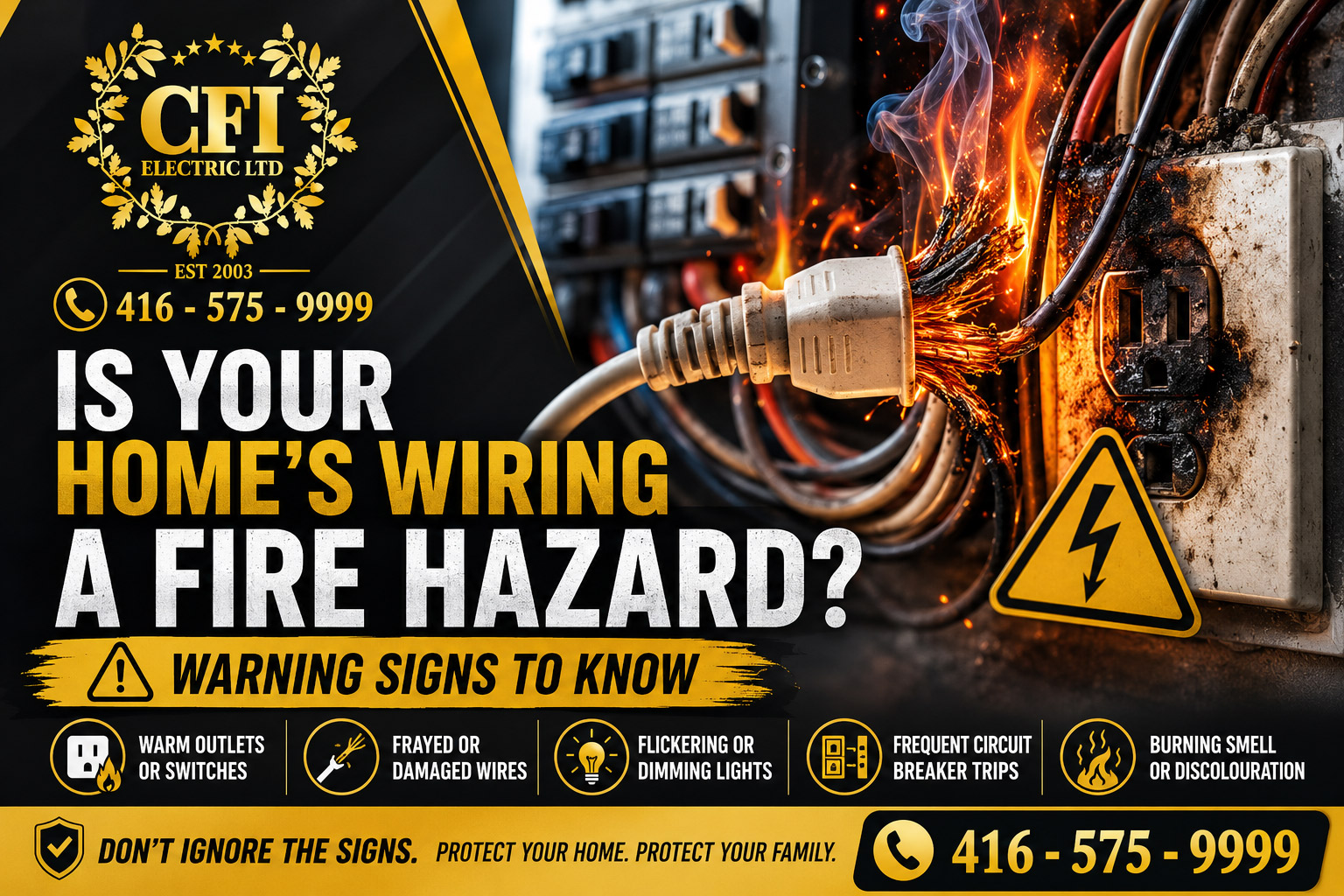
Flickering or dimming lights: Occasional flickering during a storm is normal. Persistent flickering — especially when you run certain appliances — suggests loose connections or overloaded circuits.
Breakers that trip frequently: A breaker trips as a safety measure. If yours is tripping repeatedly, the circuit is being overloaded or there's a fault in the wiring. This is not a problem you reset your way out of.
Burning smell or discolouration near outlets: A burning smell, scorch marks, or discolouration around outlets or switch plates is a serious red flag. It means heat is building up where it shouldn't be.
Outlets that are warm to the touch: Switch plates and outlet covers should never feel warm. Warmth indicates excess resistance in the wiring — a classic sign of deterioration or an overloaded circuit.
Sparks when plugging in devices: An occasional small spark when plugging something in can be normal. Large, persistent, or repeated sparking is not — and it signals a wiring or outlet problem.
No ground fault protection in wet areas: GFCI (Ground Fault Circuit Interrupter) outlets are required by code in kitchens, bathrooms, garages, and outdoor areas. If your home doesn't have them, it's a code compliance issue and a safety risk.
High-Risk Wiring Types Found in Oshawa, Ontario Homes
Certain wiring systems pose a higher risk than others, and they're more common in older Oshawa, Ontario neighbourhoods than many homeowners realize. Here are the three most important to know about:
Knob-and-Tube Wiring
Installed in homes built before the 1950s, knob-and-tube wiring uses individual copper conductors run through ceramic knobs and tubes. It has no ground wire, cannot support three-prong outlets, and the insulation becomes extremely brittle with age. Many insurance companies in Ontario now refuse to insure homes with active knob-and-tube wiring, or charge significantly higher premiums.
Aluminum Wiring
During the 1960s and 70s, aluminum was commonly used as a substitute for copper in residential wiring. The problem is that aluminum expands and contracts with temperature changes more than copper, which loosens connections over time and creates heat at junction points. Homes in Oshawa wired with aluminum during this era may be at elevated risk unless the connections have been properly treated with anti-oxidant compound and CO/ALR-rated devices.
Ungrounded Two-Prong Outlets
If your home still has two-prong outlets throughout, the wiring system lacks a ground conductor. This creates a shock risk and means your electronics and appliances aren't properly protected against power surges. It also indicates the system likely predates modern electrical codes.
What to Do If You Spot Warning Signs in Oshawa, Ontario
If you've noticed any of the warning signs above, here's how to respond safely. Do not attempt to investigate or repair wiring yourself — electrical work in Ontario must be performed by a licensed electrician.
Stop using the affected outlet or circuit immediately if you notice burning, sparking, or warmth.
Do not cover warning signs by resetting breakers repeatedly — document the issue and contact a licensed electrician.
Schedule a full electrical inspection to get a professional assessment of your home's wiring condition.
If you suspect an active fire hazard — strong burning smell, visible smoke, or repeated sparking — leave the home and call 911.
Once any immediate danger is addressed, work with your electrician to develop a remediation plan and timeline.
Frequently Asked Questions
At what age does wiring typically become a concern?
Wiring installed before 1970 warrants a professional inspection simply due to age — regardless of visible symptoms. The materials and standards used in that era are significantly below what's required today, and decades of thermal cycling can degrade even wiring that appears intact.
Can I get home insurance if I have knob-and-tube wiring?
Some insurers in Ontario will insure homes with knob-and-tube wiring if it's been inspected and certified as in good condition. However, many will not, or will attach significant conditions. It's worth calling your insurer directly to understand your current policy's position.
How long does it take to rewire a home?
A full rewire of an average-sized home typically takes three to five days, depending on size, accessibility, and the extent of the work. Some phased approaches allow homeowners to prioritize the highest-risk areas first.
Is aluminum wiring always dangerous?
Not necessarily — if the connections have been properly maintained using approved methods, aluminum wiring can be managed safely. But it does require periodic inspection and specific outlet/switch devices rated for aluminum conductors. A licensed electrician can assess the current state of aluminum wiring in your home.
Can a home inspection identify wiring hazards?
A general home inspector can flag visible concerns and known risk factors, but they do not open walls or conduct a full electrical inspection. An ESA-licensed electrician performing a dedicated electrical inspection will give you a far more thorough picture of what's happening inside your walls.
Conclusion
The warning signs of dangerous wiring are easy to overlook — until they aren't. Flickering lights, warm outlets, frequent breaker trips, and the presence of older wiring systems like knob-and-tube or aluminum are all signals worth taking seriously in Oshawa, Ontario. Your home's electrical system was built to last, but not forever, and the consequences of ignoring deterioration can be devastating. CFI Electric Ltd provides thorough electrical inspections and wiring assessments across Oshawa and Durham Region. If something in your home is giving you pause, call us at (416) 575-9999 — peace of mind is worth the call.

SERVICES
HELPFUL LINKS
CONTACT INFORMATION
Phone: (416) 575-9999
Location: Oshawa, ON L1H 4E1
Master Electrician License #6002110 ESA Contractor: 7001418
ECRA: MCR 1290

Your privacy is extremely important to us. The trust placed in us by our customers is absolutely essential to our success. We understand that and do all we can to earn and protect that trust. We do not share, sell, loan or use your personal information with any outside companies or third parties without your consent. We will use your personal information as needed when communicating with ESA (Electrical Safety Authority) and/or the local hydro utility (such as Toronto Hydro, Alectra, Oakville Hydro, etc...) to pull out permits, organize inspections and ensure that our work is compliant with OBC and OESC for your property.
@ Copyright 2026• CFI ELECTRIC LTD. • All Rights Reserved
Website Done By: LocalEyes